
In prior posts [1] [2], I have discussed many issues related to obtaining digital imagery, as well as measuring data discovery. These are aspects of evidence preservation that all litigating attorneys should be aware of, and consider carefully. Now I’m going to turn the attention to the ways in which electronic data can be used within your litigated cases.
How to use Digital Imagery in Modern Litigation
At Exhibit One Legal, one of the first questions we ask a potential client (before doing any work) is what source material is available to use? Specifically, what digital imagery is available? I refer to digital imagery broadly to include both photographs and video. This is crucial whether your case is based on personal injury, construction defect, or any other matter where the physical location is key to the underlying issues. Obtaining and using that digital imagery, and measuring data well, can be the difference between winning and losing.
There is nothing more critical for recreating a scene than the evidence obtained and captured immediately following, during, or after an incident. When we are given (or when we are asked to go obtain) this evidence from the location of the scene of a case, it allows us to accurately place all of the important elements directly into a 3D environment. When that evidence is collected in this manner, it provides for a strong foundational basis. For those not familiar with the tools now available in this process, I’m going to discuss some of the main options available currently, and how they can be best utilized to strengthen your case.
The 3D Modeling Environment
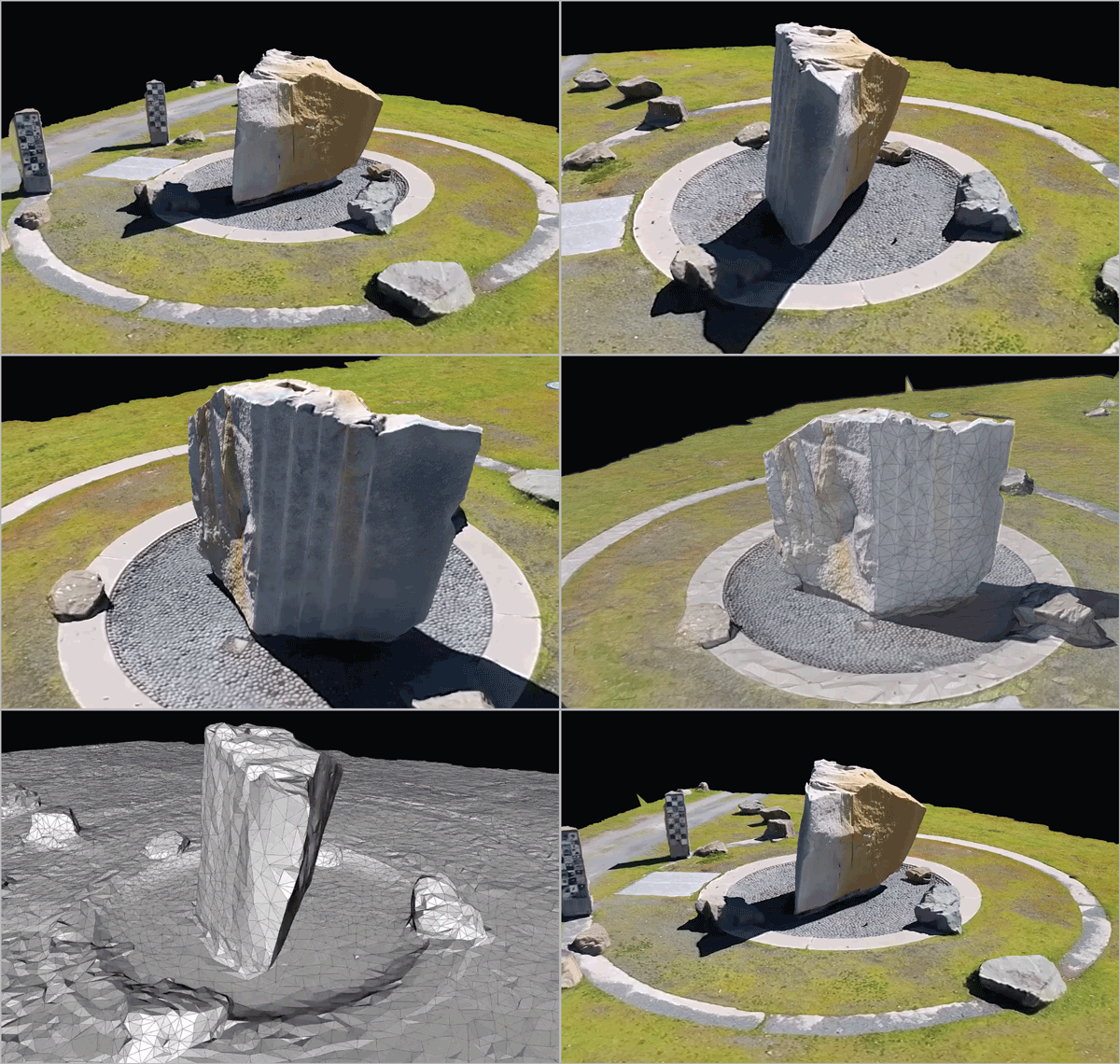
At the foundation basis of evidence gathering, and in use for modern-day litigation, is the 3D modeling environment. Attorneys often ask when I refer to 3D modeling if I am referring to making a physical model out of wood or some material. 3D Modeling, in actuality is a fully electronic process of recreating any scene or object in as precise a manner as needed for that particular case. Utilizing powerful 3D modeling programs, designers can either build 3D digital models using computer software, while simply looking at photographs provided by experts and/or attorneys; ideally, starting with a more sophisticated foundation, such as a laser scans, can be a real added benefit for your case.
01. Modeling Based on Digital Imagery
On occasion, Exhibit One’s clients are unable to provide laser scans or decent quality photographs from the time of the incident. In this case, backup measures, often collected from Google Earth or Google Maps is a great way to start the process of recreating the scene. These online platforms usually provide reasonably good aerial images of a scene, including historical images as far back as they go, and Google Street View for imagery at near eye-level. Combining these sources, experienced 3D modeling designers can recreate an incident’s scene accurately (at least to a level that demonstrates the basic aspects of the scene, given the historical images available and online resources). However, what it lacks are any exacting measurements or foundation. If your case is not dependent on the scene itself, and the scene is really just a backdrop to the issues in the case, this might be a fine way to go.
Foundation is always an issue. Having lack of foundation is often a matter in which the opposing counsel will try to exclude any work done on your behalf.
02. Modeling Based on Laser Scans
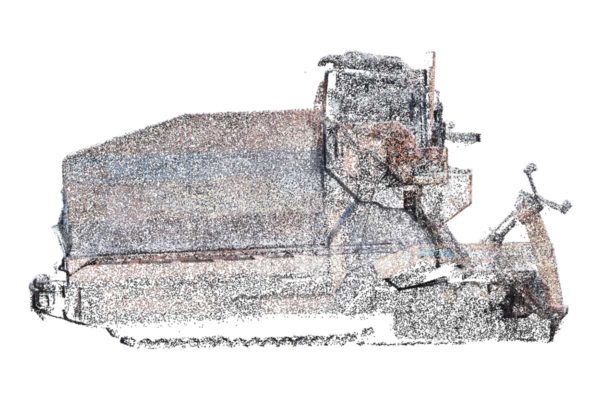
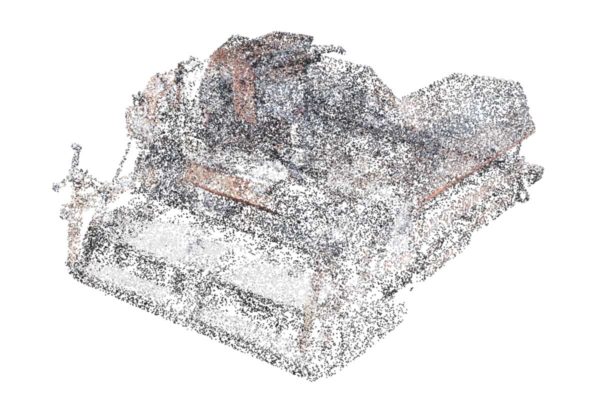
When laser scans are available, or when our clients request that we capture a scene using our own equipment, such options make the work of a 3D modeler much easier. Depending on the resolution of the scans available, it may be possible to use the scans directly as a 3D context, or more likely, the scan can be used as a layer for a designer to model around and over (a kind of 3D tracing if you will). With the scan set imported into 3D modeling software, the designer can basically trace every denoted aspect of the scene relevant to the case, using the scan(s) as a foundational background to create a highly realistic 3D model. The designer can size all the buildings, windows, doorways, street lamps, sidewalks, etc., found within the laser scans, and provide a simple, optimized version of the scene that is easy to understand. When the model is complete, any expert on the case can verify that the model is accurately representing the scene by comparing the original scans’ underlying dataset to that of the 3D model recreation.
As an example of this technique, here is an image of what it looks like to compare a laser scan to a 3D model from the scan.
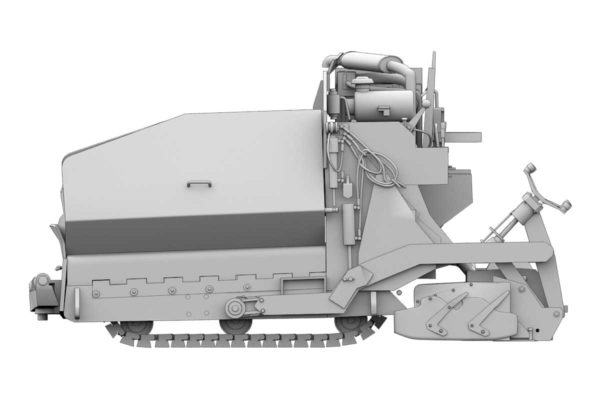
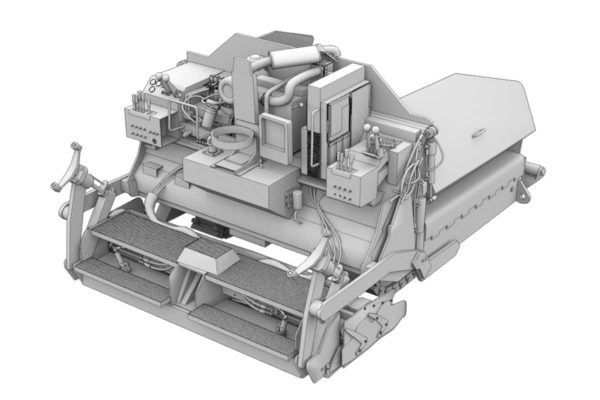
As part of the modeling process, a 3D modeler will add in what are called “textures”, which help make the scene appear highly realistic. A texture is nothing more than an image of what the exterior of something looks like; whether wood, asphalt, human skin, or the like. A good 3D modeler is able to match the textures that he or she sees in a photograph, to an electronic version, resulting in a realistic rendering of the 3D model. That said, one of the best ways to recreate scene textures effectively, efficiently, and accurately is by implementing drone flights to capture 1000s of photos and/or video, which can be later compiled into a 3D scene using photogrammetry software and/or used as-is to project images onto the surface of a 3D model, which I will discuss in the next post.
As touched on above, once a 3D model is finished, it can be rendered by a computer into a single image and/or a dynamic animation(s) can be produced. This rendering process is basically the computer conducting millions of calculations regarding lighting parameters, as well as physical properties of materials, resulting quite often as a highy-realistic rendition of reality. Furthermore, if the 3D model is going to be animated in some way, then a computer (or often a render farm of multiple computers) perform millions of calculations, over and over, compiling a series animation/video frames, each version slightly different than the prior one. This creates the impression of movement, just as a simple flip book animation of the past would propel objects through space. Thankfully, these millions of calculations performed by computers, assist us in being able to recreate the scene. This is possible because of the sophisticated principles of physics, and provides camera views that appear to give way into a window frame of the 3D virtual scene represented.
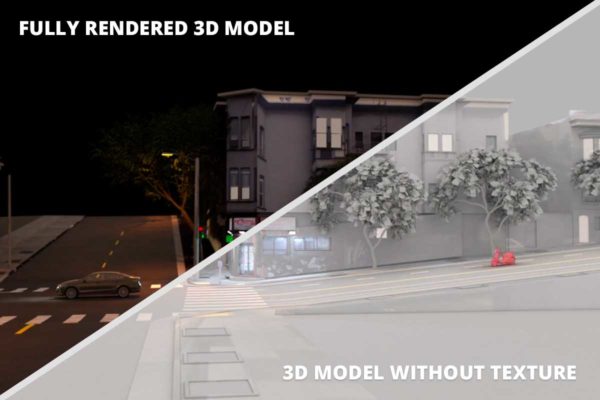
Below is a sample image of what a single render looks like for a high-quality 3D model.
Below is a sample of an animation that is basically a series of 1000s of still images that is shown at a speed that gives the illusion of movement.
Fully rendered 3D animation by Exhibit One
In my next article, we will discuss the modern use of drones for litigation discovery. To be notified by email when new posts are available, please subscribe to our blog below.